SS 304 vs SS 202 Kitchen Sink: Which is Better for Indian Kitchens?
They look identical. They feel identical. But one will last 15 years and the other may rust within 3. Here's how to tell the difference — and why it matters more in India than anywhere else.
SS 304 sinks are better than SS 202 sinks for Indian kitchens. SS 304 contains 18% chromium and 8% nickel, giving it significantly higher corrosion resistance — critical for Indian conditions with hard water, heavy utensils, and frequent washing. SS 202 is cheaper but has much lower nickel content, making it prone to rust within 1-3 years in hard water areas.
The price difference is real but misleading. SS 304 costs more upfront, but lasts 15-20+ years. SS 202 saves money initially but often needs replacement within 5-8 years — making it more expensive over the sink's lifetime.
How to verify: Ask for a BIS certification (IS 13983:1994) or a Material Test Report (MTR). Visual inspection alone cannot distinguish SS 304 from SS 202.
- Key Differences — Quick Comparison
- What Are SS 304 and SS 202?
- Why They Look the Same (But Aren't)
- Performance in Indian Kitchen Conditions
- Full Comparison Table
- How to Check if a Sink is SS 304 or SS 202
- BIS Certification: Why It Matters More Than Claims
- The E-Commerce Problem
- Why Builders Use SS 202 (And What It Means for You)
- Pre-Purchase Checklist
- What Sets Futura Apart
- Common Questions Answered
- The Verdict
- FAQ
SS 304 vs SS 202: Key Differences for Kitchen Sinks
Corrosion Resistance
SS 304 WinsSS 304 contains 18% chromium and 8% nickel, forming a robust self-healing oxide layer that resists rust even under constant water exposure. SS 202 has only 0.5-4% nickel and substitutes manganese, offering significantly lower corrosion protection. In Indian kitchens with daily water, salt, and acidic food exposure, this difference is the deciding factor.
Hard Water Performance
SS 304 WinsMost Indian cities have water hardness between 300-600 mg/L TDS (Delhi exceeds 900 mg/L). SS 304 handles hard water deposits without structural degradation — they sit on the surface and wipe off. SS 202 can corrode beneath mineral deposits over time, developing pitting that becomes permanent. If your city has hard water, SS 304 is not optional.
Durability and Lifespan
SS 304 WinsSS 304 sinks last 15-20+ years with basic care. SS 202 sinks typically last 5-8 years under Indian kitchen conditions before showing visible degradation — rust spots, pitting, or structural weakness. A sink is installed once and expected to last for years; replacement means plumbing disruption and reinstallation costs.
Price
SS 202 Wins (Short-Term Only)SS 202 is cheaper because it contains far less nickel — the most expensive component in stainless steel. However, the cost per year of use often favours SS 304: a ₹5,000 SS 304 sink lasting 15 years costs ₹333/year, while a ₹3,000 SS 202 sink lasting 5 years costs ₹600/year — nearly double.
Food Safety and Hygiene
SS 304 WinsSS 304 is classified as food-grade stainless steel globally. Its non-porous surface prevents bacterial growth and resists acid from lemon, vinegar, tamarind, and other common Indian cooking ingredients. SS 202 is more susceptible to surface degradation from acidic exposure, which can create microscopic pitting where bacteria accumulate.
Visual Appearance
Identical When NewThis is the core problem: SS 304 and SS 202 look exactly the same when new — same finish, same shine, same design. The difference only becomes visible after 1-3 years of use, when SS 202 may start showing rust spots, discolouration, or pitting. You cannot distinguish them visually at the point of purchase.
What Are SS 304 and SS 202, Really?
SS 304 — The Industry Standard
SS 304 (also marked 18/8) is an austenitic stainless steel containing 18% chromium and 8% nickel. The high nickel content is what gives it superior corrosion resistance — chromium forms the protective oxide layer, and nickel stabilises it. This is the grade specified by BIS standards for kitchen sinks in India (IS 13983:1994), used in food processing equipment globally, and considered the benchmark for any surface that has regular water and chemical exposure.
SS 202 — The Budget Alternative
SS 202 is also an austenitic stainless steel, but it substitutes much of the nickel with manganese and nitrogen — bringing the nickel content down to just 0.5-4%. This dramatically reduces manufacturing cost (nickel is an expensive traded commodity), which is why SS 202 sinks are cheaper. However, the trade-off is measurably lower corrosion resistance. SS 202 performs adequately in dry, low-exposure environments — but Indian kitchens are neither dry nor low-exposure.
Why SS 304 and SS 202 Look Identical (But Perform Very Differently)
This is the single biggest reason buyers get confused — and the reason unverified claims persist in the market. When you place an SS 304 sink and an SS 202 sink side by side in a showroom or on an e-commerce listing, they are visually indistinguishable. Same finish. Same shine. Same design options. Same weight feel. The difference is in the molecular composition of the alloy, not in anything your eyes can detect.
This means price becomes the only visible differentiator — and that's exactly where the problem starts. A buyer comparing two "stainless steel sinks" online will naturally gravitate toward the cheaper one, not realising that the material inside is fundamentally different. Without certification or a material test report, there's no way to verify what you're actually getting.
Why This Matters More in Indian Kitchens Than Anywhere Else
Indian kitchens put sinks through conditions that most global kitchens don't come close to. Understanding this is key to understanding why SS 304 isn't just "better" — it's necessary.
Hard water exposure: Most Indian cities have water between 300-600 mg/L TDS. Delhi groundwater regularly exceeds 900 mg/L. Chennai, Hyderabad, and Bangalore all have moderate-to-severe hard water. This constant mineral exposure attacks lower-grade steel from the outside, accelerating corrosion in SS 202 significantly faster than in controlled test environments.
Heavy utensils and physical impact: Pressure cookers, cast-iron tawas, and large steel kadhais weighing 2-5 kg are placed in and out of the sink multiple times daily. This requires both surface hardness and structural integrity that thinner, lower-grade steel struggles to maintain.
Acidic and chemical exposure: Lemon, tamarind, vinegar, salt, turmeric, and strong detergents are daily constants in Indian cooking. Acidic residue left on a sink surface attacks the chromium oxide layer — SS 304's higher nickel content helps this layer regenerate faster than SS 202's.
Frequency of use: Indian cooking typically involves 2-3 full cooking and washing cycles per day — significantly higher than the 1-per-day average in Western households. This multiplied exposure accelerates the performance gap between SS 304 and SS 202.
Full Comparison: SS 304 vs SS 202 Kitchen Sinks
| Factor | SS 304 Sink | SS 202 Sink | Winner |
|---|---|---|---|
| Chromium content | ~18% | ~16-17% | 304 ✓ |
| Nickel content | ~8-10.5% | ~0.5-4% | 304 ✓ |
| Corrosion resistance | Excellent | Moderate to low | 304 ✓ |
| Rust resistance | Highly resistant | Can rust in 1-3 years | 304 ✓ |
| Hard water performance | Handles well long-term | Corrodes under mineral deposits | 304 ✓ |
| Acid resistance (lemon, tamarind) | Strong — self-healing oxide layer | Weaker — slower regeneration | 304 ✓ |
| Food safety | Food-grade (globally recognised) | Not classified as food-grade | 304 ✓ |
| Lifespan | 15-20+ years | 5-8 years in Indian conditions | 304 ✓ |
| BIS certified (IS 13983) | Yes — meets Indian standards | Does not meet IS 13983 | 304 ✓ |
| Price | Higher upfront | Lower upfront | 202 ✓ |
| Cost per year of use | Lower (longer lifespan) | Higher (shorter lifespan) | 304 ✓ |
| Visual appearance (new) | Identical to SS 202 | Identical to SS 304 | Tie |
How to Check if a Sink is SS 304 or SS 202
Since visual inspection is useless, here are the three methods that actually work — in order of reliability:
1. Material Test Report (MTR) — Most reliable. Request a certified MTR from the manufacturer. This is a lab-tested document showing the exact chemical composition of the steel alloy used. Any credible manufacturer will provide this on request. If they can't or won't, treat it as a red flag.
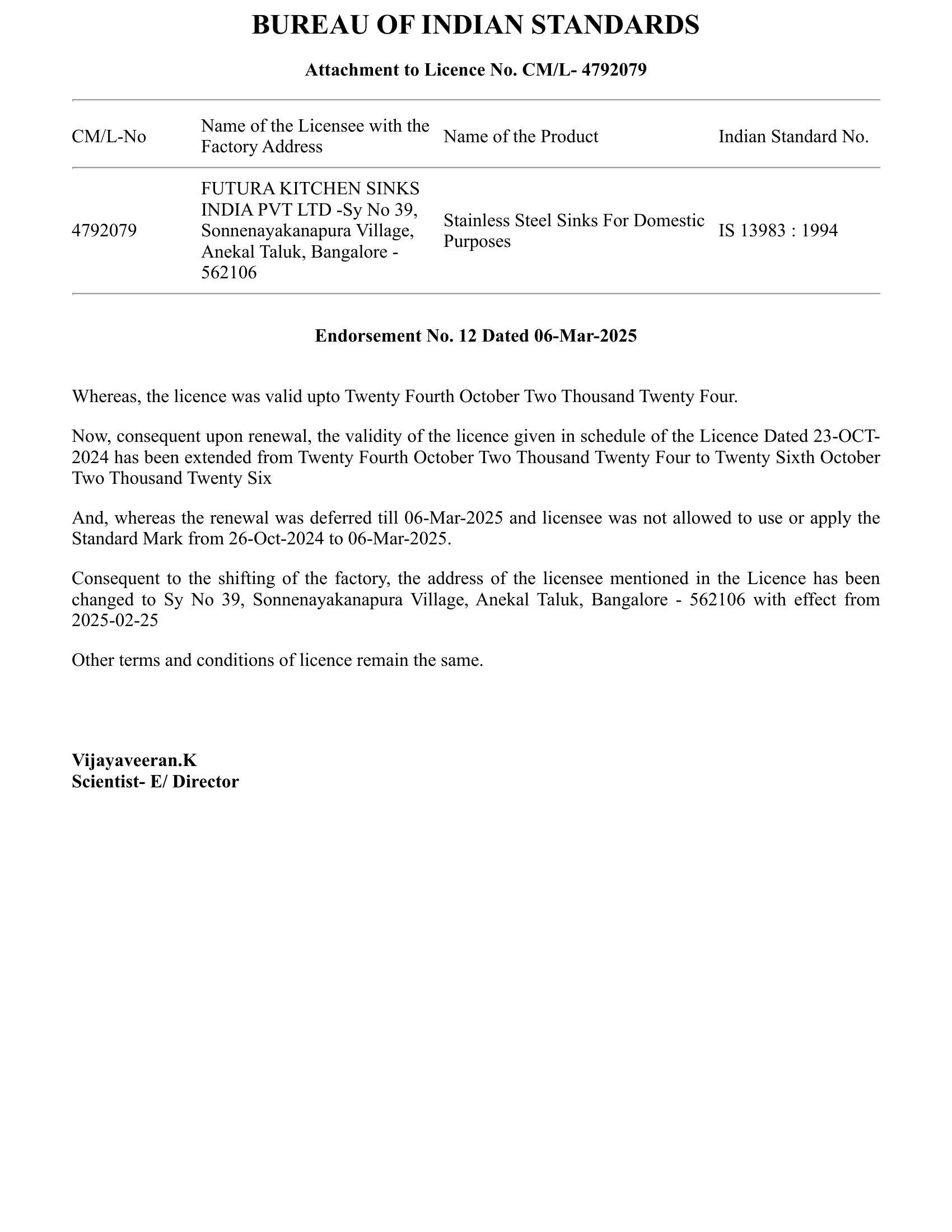
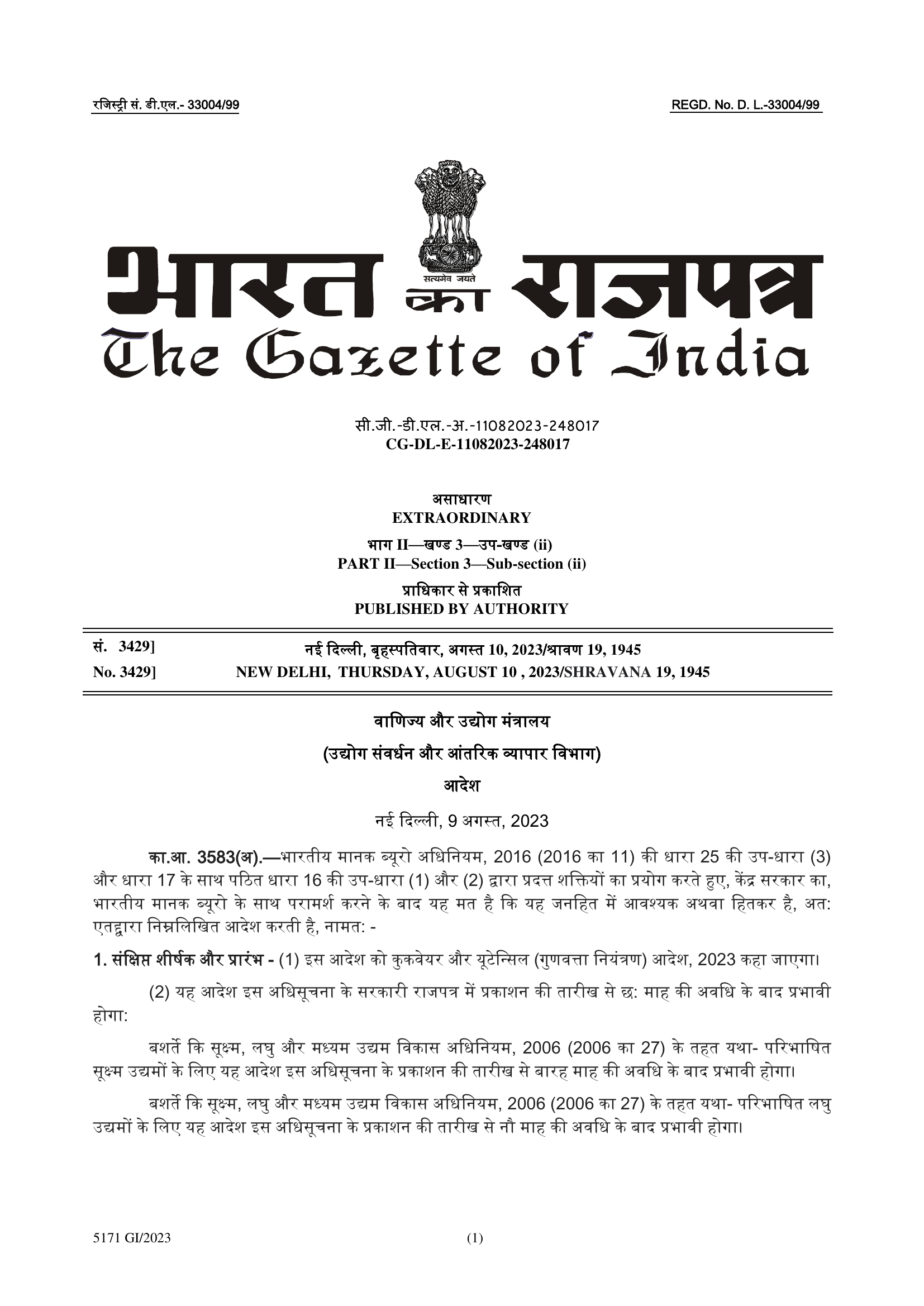
2. BIS Certification — IS 13983:1994. If the sink carries a BIS mark under IS 13983 (Stainless Steel Sinks for Domestic Purposes), it's been verified to meet the standard — which requires SS 304 grade. Under the Quality Control Order (QCO) 2023, kitchen-related products must comply with Indian standards. BIS-certified products have been independently tested.
3. Spark test — Indicative but not definitive. When ground with a grinder, SS 304 produces thin, reddish-orange sparks that don't fly far. SS 202 produces thicker, yellow sparks that scatter further. This can help differentiate in a workshop setting but isn't practical for retail buyers.
BIS Certification: Why It Matters More Than Material Claims
In India, product quality for kitchen sinks is regulated through the Bureau of Indian Standards (BIS). The relevant standard is IS 13983:1994 — Stainless Steel Sinks for Domestic Purposes.
Under the Quality Control Order (QCO) 2023, kitchen-related products must comply with Indian standards and carry certification marks. This means a BIS-certified kitchen sink has been tested for material composition (verified SS 304), standardised manufacturing process, and consistent product quality.
Anyone can stamp "SS 304" on a product listing or packaging. BIS certification means it's been independently verified. This is especially important when purchasing from online marketplaces where manufacturer transparency is often limited.
The E-Commerce Reality: Why Online Buyers Need to Be Careful
Kitchen sinks are now widely available on Amazon, Flipkart, and other marketplaces at aggressively low prices. Many are listed as "SS 304" or "food-grade stainless steel" — but without independent verification, there's no way to confirm these claims from a product listing.
Common issues include products labeled as SS 304 without any certification proof, lack of manufacturer transparency (traded brands vs actual manufacturers), inconsistent thickness (claimed vs actual), and no MTR or BIS mark available on request.
Since SS 304 and SS 202 look identical, a lower-priced "SS 304" listing might simply be SS 202 with a marketing claim. The only protection is buying from manufacturers who can provide verifiable certification — or from dealers who stock certified brands.
Why Builders Use SS 202 — And What It Means for Homeowners
Despite the clear performance gap, SS 202 sinks are widely used in the Indian construction industry. They're the default in affordable housing projects, builder-grade kitchens, and budget-driven installations. The reason is straightforward: cost reduction. SS 202 sinks with 0.6-0.8mm thickness cost a fraction of SS 304 sinks at 1mm thickness.
For builders working on 200-500 unit projects, the per-unit saving adds up. But for the homeowner who moves in, the sink is a fixed installation — and replacing a corroded sink means plumbing disruption, countertop damage risk, and reinstallation expense that far exceeds the original cost difference.
If you're purchasing a new apartment and the builder has provided a basic SS 202 sink, upgrading to an SS 304 sink during the interior fitout phase is relatively inexpensive (₹4,000-₹10,000 depending on size) and saves significant hassle down the line.
Before You Buy: What to Check
- Material grade: Confirm SS 304 (not SS 202). Ask for MTR or BIS certificate.
- Thickness: Minimum 1mm for quality sinks. Avoid anything below 0.8mm — it will dent and produce excessive noise.
- BIS compliance: Look for IS 13983 certification mark. Under QCO 2023, this is the Indian quality benchmark.
- Manufacturer vs trader: Buy from an actual manufacturer with a factory, not a brand that repackages and relabels. Manufacturers can provide MTRs; traders often cannot.
- Sound dampening: Quality sinks include factory-fitted rubber undercoating or sound pads. This significantly reduces the noise of utensils and running water.
- Included accessories: Check what comes in the box — waste coupling, drainer kit, and faucet (for handmade models) should be included, not sold separately.
What Sets Futura Apart
Futura Kitchen Sinks India Pvt. Ltd. has been manufacturing kitchen sinks in Bangalore since 1997 — from a 1,00,000 sq. ft. factory that's among the largest dedicated sink manufacturing facilities in South India.
Every single Futura kitchen sink is SS 304 grade. There is no SS 202 in our product lineup — across the entire range from the entry-level Dura Series to the premium Intelligent Sink Series. This isn't a marketing claim — it's independently verified through our BIS license (CM/L-4792079 under IS 13983:1994, valid until October 2026), ISO 9001 quality management certification, and material test reports available on request for any product or batch.
Across our stainless steel range, every sink is manufactured with a minimum 1mm thickness (1.2mm for the Intelligent and Handcarved Series), integrated anti-fungal coating, and factory-fitted sound-dampening pads.
Browse by series:
Dura Series — Pressed SS 304, satin finish, from ₹4,350. Best for everyday use and builder projects.
Handcarved Series — Handmade SS 304, brushed finish, 1.2mm thick, from ₹6,500. Best for premium and design-focused kitchens.
Natural Quartz Series — 80% quartz composite, from ₹7,450. Best for hard water cities and modular kitchens.
Intelligent Sink Series — Workstation sinks, 1.2mm SS 304, from ₹33,000. Best for maximum functionality in modular kitchens.
For a complete guide to choosing between these options, read our 2026 Kitchen Sink Buying Guide.
Need Help Choosing the Right Sink?
Whether you're a homeowner, builder, architect, or dealer — our team can help you find the right SS 304 sink for your requirement and budget.
Common Questions About SS 304 and SS 202 Sinks
How to check if a sink is SS 304 or SS 202?
Request a certified Material Test Report (MTR) from the manufacturer — this is the most reliable method. Alternatively, check for BIS certification under IS 13983:1994. A spark test (SS 304 = thin reddish-orange sparks; SS 202 = thicker yellow sparks) can help in a workshop setting but isn't practical for retail buyers. Visual inspection alone cannot distinguish the two grades.
Is SS 316 better than SS 304 for kitchen sinks?
SS 316 (marine-grade) has even higher corrosion resistance due to added molybdenum, but it's significantly more expensive and overkill for domestic kitchens. SS 304 provides more than adequate performance for Indian kitchen conditions including hard water, acidic foods, and heavy use. SS 316 is typically reserved for coastal industrial applications, medical equipment, and chemical processing — not household sinks.
What thickness should a stainless steel kitchen sink be?
Minimum 1mm (approximately 18-gauge) for quality sinks. This provides structural rigidity, reduces noise, and resists denting from heavy utensils like pressure cookers. Budget sinks often use 0.6-0.8mm (20-22 gauge), which dents more easily and produces significantly more noise. Futura's Handcarved and Intelligent Series use 1.2mm for extra durability and quieter operation.
Can I replace an SS 202 sink with SS 304 without changing the plumbing?
In most cases, yes. If the new SS 304 sink has the same overall dimensions as your existing SS 202 sink, it drops into the same cutout without plumbing modifications. This makes it a straightforward upgrade during a kitchen renovation or when moving into a new builder-provided apartment with a basic sink.
The Verdict
Choose SS 304 if you want long-term durability, live in a hard water area, use your kitchen heavily, or are specifying sinks for a builder project where post-installation complaints need to be minimised. SS 304 is the BIS-recommended grade, the food-safety standard globally, and the material that will still look good after 15 years of Indian kitchen conditions.
Consider SS 202 only if budget is extremely constrained, usage is minimal (e.g., a rarely-used second home), or you're installing as a very short-term solution with planned replacement.
A kitchen sink is installed once and expected to last for years. It sits at the centre of your busiest room, handling the hardest conditions your home produces. The difference between SS 304 and SS 202 is invisible on day one and unmistakable by year three. Choose accordingly.
Frequently Asked Questions
No stainless steel is 100% rust-proof, but SS 304 is highly resistant due to its 18% chromium and 8% nickel content. It forms a self-healing oxide layer that protects against corrosion. With basic care, an SS 304 sink lasts 15-20+ years even in hard water conditions.
Yes — especially in Indian conditions with hard water and frequent use. SS 202 sinks can develop rust spots within 1-3 years in cities like Delhi, Chennai, and Hyderabad where water TDS is high.
SS 304 contains approximately 8-10.5% nickel vs only 0.5-4% in SS 202. Nickel is an expensive traded commodity. However, the longer lifespan of SS 304 (15-20+ years vs 5-8 years) means it costs less per year of use.
Ask the manufacturer for a Material Test Report (MTR) or check for BIS certification under IS 13983:1994. A spark test can help (304 = thin reddish sparks; 202 = thick yellow sparks), but the MTR is the only definitive proof.
SS 316 has higher corrosion resistance but is significantly more expensive and unnecessary for domestic kitchens. SS 304 is more than adequate for Indian kitchen conditions. SS 316 is reserved for industrial and marine applications.
Minimum 1mm (18-gauge) for quality sinks. This provides rigidity, reduces noise, and resists denting. Avoid anything below 0.8mm. Futura's Handcarved Series uses 1.2mm for extra durability.
Yes. A ₹5,000 SS 304 sink lasting 15 years costs ₹333/year. A ₹3,000 SS 202 sink lasting 5 years costs ₹600/year — nearly double. Plus you avoid the cost and hassle of replacement, which involves plumbing disruption and potential countertop damage.