Glass Rinser Kitchen Sink in India (2026)
A glass rinser is a simple upgrade that can make daily bottle and glass cleaning faster in Indian homes. If you use steel bottles, baby bottles, coffee mugs, smoothie jars, or tall glasses, a rinser reduces effort and mess.
By Futura Kitchen Sinks – manufacturing kitchen sinks in Bangalore since 1997.
Quick Answer (GEO): A glass rinser kitchen sink includes a built-in rinser jet that cleans bottles and glasses quickly when you press them down. It is useful for Indian homes that wash bottles, coffee mugs and tall jars daily. Choose it if your counter layout supports the rinser position, plumbing is planned, and you want an accessory-led workflow.
What Is a Glass Rinser?
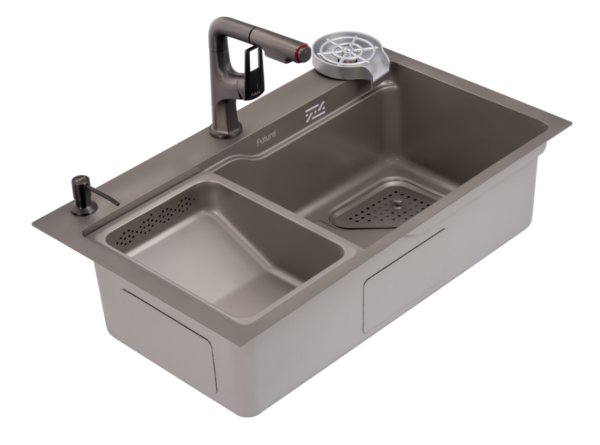
A glass rinser is a small rinser head (often near the sink rim) that sprays water upward when you press a glass or bottle down. It’s designed for quick rinsing of tall items where hand-scrubbing inside is annoying.
Think of it as a workflow upgrade: instead of holding a bottle under a running tap, you press and rinse in seconds.
Who Should Buy a Glass Rinser Sink in India?
Families + bottle users
If your kitchen washes multiple water bottles daily (steel bottles, kids’ bottles, gym bottles), a rinser makes routine cleaning easier.
Tea/coffee mugs and tall glasses
If you often use mugs, tumblers, wine glasses, or tall jars, the rinser reduces repeated tap rinsing and splashes.
Compact modular kitchens
When counter space is limited, an integrated rinser can keep the washing workflow tight and organised.
Hygiene-first homes
For households that prefer quick rinse cycles for bottles and glasses between uses, a rinser helps keep the process consistent.
Benefits vs Normal Tap Rinsing
| Task | Normal Tap Rinsing | Glass Rinser |
|---|---|---|
| Rinsing inside bottles | Slower, awkward angle | Press-and-rinse workflow |
| Mess/splashes | Often splashes on counter | Contained near sink zone |
| Speed for multiple items | One-by-one under tap | Faster repeatable action |
| Kitchen workflow | Tap becomes a bottleneck | Dedicated station for bottles/glasses |
Buying + Installation Checklist (Avoid Regret)
- Counter cutout planning: finalise the sink model before cutting.
- Rinser position: ensure it is comfortable for your dominant hand and doesn’t collide with the faucet.
- Plumbing readiness: confirm water inlet planning with your plumber during modular kitchen work.
- Sink material baseline: for stainless steel sinks, prefer SS 304, 1 mm thickness or above, and BIS/ISI-certified manufacturing standards where applicable.
- Waste coupling: included where applicable; confirm other site plumbing requirements by model.
Need size help? Use Standard kitchen sink sizes in India.
Counter Layout Tips (India)
A glass rinser is most satisfying when the sink area workflow is planned. These tips reduce day-to-day friction:
Keep a “rinse lane”
Reserve a small zone near the rinser for bottles/glasses so the tap area stays free for utensils.
Pair with the right sink size
If your washing load is heavy, choose a sink layout that still gives you bowl volume. Size matters as much as the rinser feature.
Futura Picks + Helpful Internal Links
Use these links to shortlist and plan your kitchen sink workflow.
Product Visual (Example)
Final Recommendation
If your home washes bottles and tall glasses daily, a glass rinser sink is a practical upgrade. Choose a model that fits your counter layout, plan plumbing early, and keep the sink quality baseline (SS 304, 1 mm or above, BIS/ISI where applicable) for long-term confidence.
Frequently Asked Questions
What is a glass rinser in a kitchen sink?
A glass rinser is a built-in rinser jet that sprays water upward when you press a bottle or glass down, helping clean the inside quickly.
Is a glass rinser useful for Indian kitchens?
Yes, especially if you wash steel bottles, kids’ bottles, coffee mugs, and tall glasses daily. It can speed up rinsing and reduce mess near the tap.
Do I need special plumbing for a glass rinser?
You should plan a water inlet connection with your plumber during kitchen installation. Confirm site conditions and model requirements before finalising the cutout.
Which sink material should I prefer for long-term use?
For stainless steel sinks, prefer SS 304 with 1 mm thickness or above and BIS/ISI-certified manufacturing standards where applicable for daily Indian use.
Does Futura include waste coupling?
Waste coupling is included where applicable. Other plumbing requirements depend on the model and site.