Quartz vs Stainless Steel Kitchen Sink for Indian Kitchens — The Honest Guide
Pressure cookers, turmeric stains, hard water, and heavy kadais. Your sink goes through a lot. Here’s exactly which material wins — depending on how you cook.
In This Article
Walk into any kitchen showroom in Bangalore, Chennai, or Hyderabad and you’ll be asked the same question within the first two minutes: quartz or stainless steel? Most salespeople will give you a brand-specific answer. This article won’t. We’ll give you the honest comparison — including the parts that are inconvenient for both sides.
The truth is that both materials are excellent choices — but they are excellent for different kitchens and different cooking habits. The wrong choice won’t ruin your kitchen, but the right choice will make your daily cooking noticeably easier for the next 10–15 years. That’s worth five minutes of research.
1. What Are These Materials, Really?
Before comparing them, it helps to understand what you’re actually buying.
Stainless Steel
A stainless steel kitchen sink is made from low-carbon steel alloyed with at least 10.5% chromium. In quality kitchen sinks, you’ll see Grade 304 (also written 18/8), which means 18% chromium and 8% nickel — this combination delivers excellent corrosion resistance and durability. The “stainless” property comes from chromium forming an invisible self-healing oxide layer on the surface. Scratch it and it repairs itself when exposed to oxygen.
Thickness — called gauge — matters enormously. A 16-gauge sink (1.5mm thick) is significantly stronger and quieter than a 20-gauge sink (0.9mm thick). Cheaper sinks cut costs on gauge, not brand name. Always ask.
Futura’s Dura Series uses 304 Grade stainless steel with a premium satin finish and integrated anti-fungal coating — a significant step above standard press-formed sinks. Every bowl is hand-finished with sound-dampening pads to reduce kitchen noise. Available in single bowl, double bowl, and drain-board configurations from 16″x14″ up to 47″x20″.
Quartz Composite
Quartz sinks are not solid stone. They are a manufactured composite of approximately 80% crushed natural quartz mixed with 20% acrylic resin. This combination creates a dense, non-porous surface that is harder than stainless steel on the Mohs scale (~7 vs ~5.5 for steel), naturally matte in finish, and available in multiple colours.
The resin binder gives quartz sinks their colour options and also their one notable weakness: sensitivity to sudden extreme heat. The mineral content gives them scratch resistance, weight, and sound absorption.
Futura’s Natural Quartz Series uses 80% natural granite quartz mineral content with a 12mm bowl thickness — one of the deepest quartz profiles available in Indian manufacturing. Available in grey, black, ivory, and sand finishes, with single bowl, double bowl, and drain-board configurations ranging from 16″x16″ up to 46″x20″.
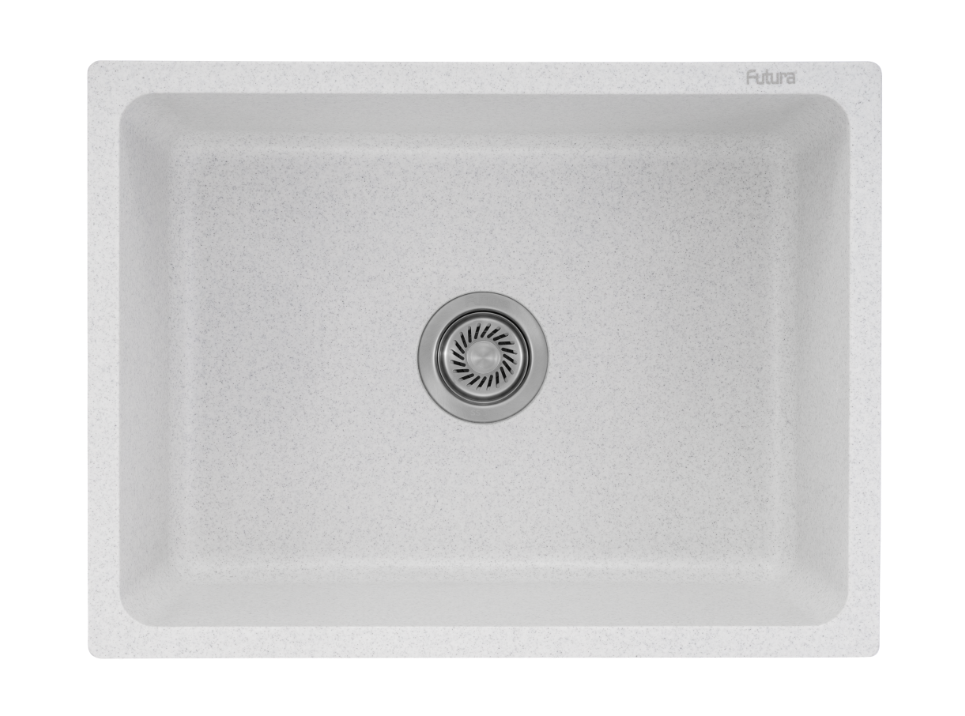
Futura Natural Quartz Series — Grey, Single Bowl 24×18
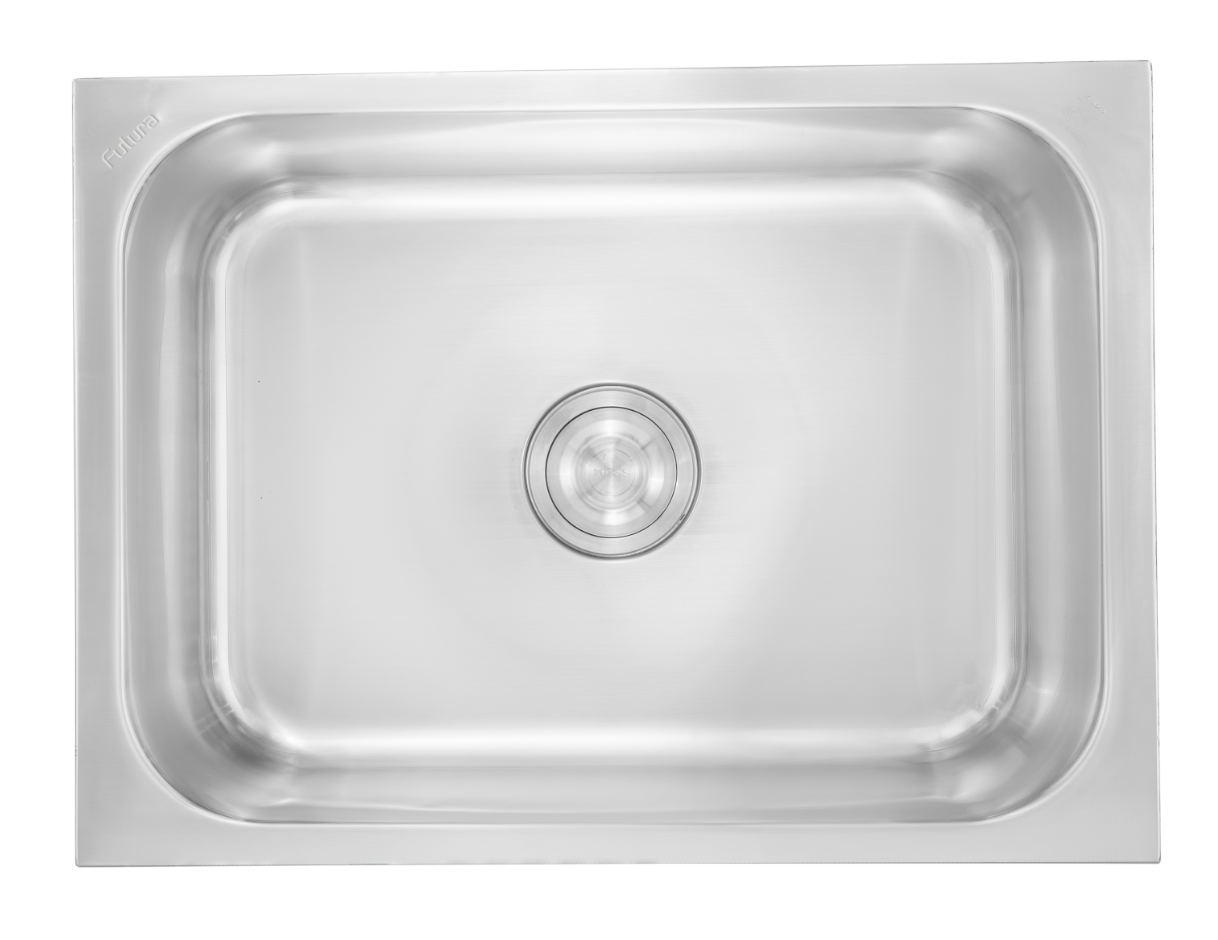
Futura Dura Series — Stainless Steel, Single Bowl 24×18
Futura’s Natural Quartz Series (left) and Dura Stainless Series (right) — same bowl size, fundamentally different materials and finishes.
2. The Indian Kitchen Test: What Actually Matters
Most comparison articles you’ll find online are written for Western kitchens — where the heaviest thing that goes into a sink is a pasta pot. Indian kitchens are a different world. Here’s what your sink actually needs to handle:
- Heavy vessels: Pressure cookers, cast-iron tawas, large steel kadais — typically 2–5 kg when full
- High-heat transfers: Hot vessels moved directly from gas flame to sink — temperature swings of 200°C+ are common
- Turmeric and masalas: Intensely pigmented spices that permanently stain porous surfaces
- Hard water: Most Indian cities have water with TDS above 300 mg/L — chronic scaling and mineral deposits
- High usage frequency: Indian cooking typically involves 2–3 full cooking sessions per day vs 1 in most Western households
- Abrasive cleaning: Steel wool and rough scrubbers are commonly used — harsh on finishes
Heat: Steel Wins Clearly
This is the most important factor for Indian kitchens and the clearest winner. Stainless steel can withstand temperatures well beyond anything produced in a domestic kitchen — you can place a pressure cooker straight from the gas directly into the sink without any concern. Quartz composite sinks, while heat-resistant up to approximately 280°C for steady heat, are vulnerable to sudden thermal shock — a very hot vessel placed directly on a cold, wet quartz surface. Over time, this can cause hairline fractures or surface damage. If your cooking style involves moving hot vessels to the sink frequently, stainless steel is the safer choice.
Turmeric and Spice Stains: Quartz Wins
Turmeric (haldi) is one of the most powerful natural dyes known — it will permanently stain grout, plastic, and even some grades of stone. On a non-porous quartz surface, turmeric cannot penetrate below the surface and wipes away with a damp cloth and mild detergent. On stainless steel, turmeric also wipes away easily — but if left for extended periods, can leave a faint yellow tint in brushed recesses. Neither material is seriously vulnerable, but quartz is measurably more forgiving.
Noise: Quartz Wins Significantly
The density of quartz composite absorbs impact and vibration naturally. Dropping a steel kadai into a stainless sink without sound-dampening pads produces a loud clang that resonates through the cabinet below. Quality stainless sinks mitigate this with rubber undercoating and sound pads — but even the best-padded steel sink will be louder than a quartz sink. In open-plan kitchens — increasingly common in South Indian urban apartments — sink noise matters.
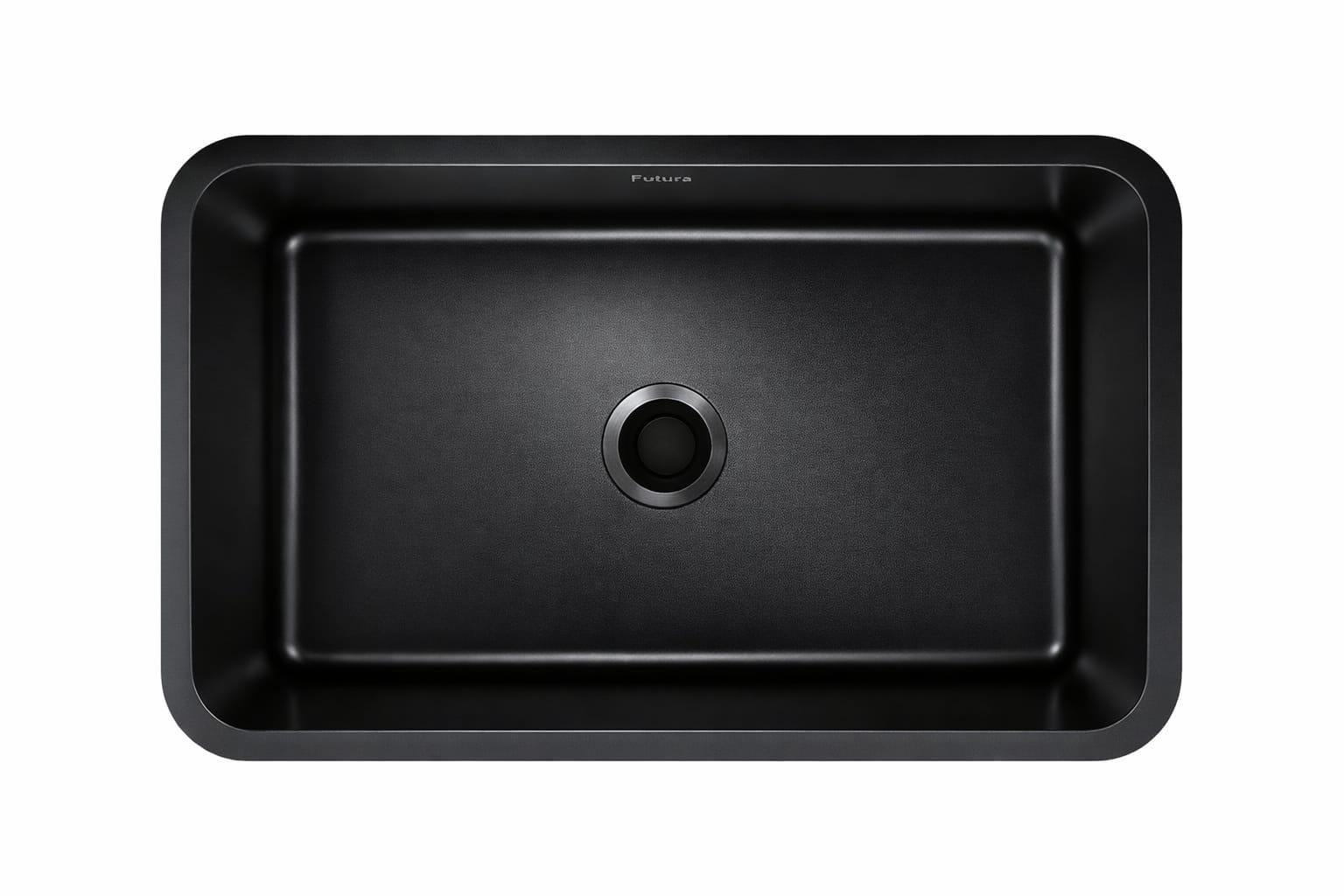
Futura Natural Quartz Series (FS 3119 NQ) — the matte granite finish naturally conceals water marks and resists daily spice stains.
3. The Hard Water Problem That Most Guides Ignore
India has a hard water problem. BIS standards define water as “hard” above 200 mg/L TDS. Most Indian city water is between 300–600 mg/L. Delhi groundwater regularly exceeds 900 mg/L. This isn’t a minor inconvenience — it directly affects how your sink looks and how long it lasts.
| City | Avg. Water Hardness | Better Sink Choice | Key Concern |
|---|---|---|---|
| Bangalore | 300–500 mg/L | Either (with maintenance) | Moderate scaling on steel; quartz hides it better |
| Chennai | 400–700 mg/L | Quartz preferred | High TDS causes visible watermarks on steel daily |
| Delhi / NCR | 600–900 mg/L | Quartz preferred | Severe scaling; steel requires weekly descaling |
| Mumbai | 100–250 mg/L | Either | Relatively soft water — steel performs very well here |
| Hyderabad | 350–600 mg/L | Quartz preferred | Borewell-dependent areas have extremely hard water |
| Kochi / Trivandrum | 150–300 mg/L | Either | Softer water; both materials perform reliably |
On stainless steel, hard water leaves white mineral deposits (limescale) that are visible after every drying cycle. These are not permanent — white vinegar removes them easily — but they require daily or weekly attention. The smooth, non-porous surface of quartz means minerals sit on top rather than bonding to the surface, making them easier to rinse away and less visible on the matte finish.
Keep a small spray bottle of diluted white vinegar (1:3 ratio with water) near your sink. A 30-second spray-and-wipe after your last use of the day eliminates 90% of hard water spotting. Takes less effort than it sounds.
4. The Full Comparison: Every Factor That Matters
| Factor | Stainless Steel (304 Grade) | Quartz Composite | Winner |
|---|---|---|---|
| Heat resistance | Excellent — handles direct contact with very hot vessels | Good up to ~280°C but vulnerable to thermal shock | Steel ✓ |
| Scratch resistance | Shows fine scratches over time, especially against grain | Excellent — ~7 Mohs hardness resists daily wear | Quartz ✓ |
| Turmeric / spice stains | Good — wipes clean; faint staining if left overnight | Excellent — non-porous surface, spills don’t penetrate | Quartz ✓ |
| Hard water marks | Visible white deposits, needs regular descaling | Less visible on matte finish, easier to manage | Quartz ✓ |
| Noise level | Louder; sound pads help but don’t fully solve it | Naturally quiet — dense material absorbs impact | Quartz ✓ |
| Impact / drop resistance | Dents under very heavy impact but doesn’t chip | Chip risk if a very heavy object hits an edge directly | Tie |
| Weight | Light — 4–8 kg; easy DIY installation | Heavy — 12–20 kg; may need reinforced cabinet | Steel ✓ |
| Colour / design options | Silver/metallic only; satin, brushed, or mirror finishes | Grey, black, ivory, sand — blends with countertops | Quartz ✓ |
| Bacterial resistance | Good — smooth surface is easy to sanitise | Excellent — non-porous surface inhibits bacteria | Quartz ✓ |
| Price range (India) | ₹3,000 – ₹25,000 for quality models | ₹12,000 – ₹45,000 for comparable quality | Steel ✓ |
| Longevity | 15–20+ years with basic care | 15–20+ years with basic care | Equal |
| Resale / renovation appeal | Timeless, universally accepted | Premium aesthetic, designer preferred | Context-dependent |
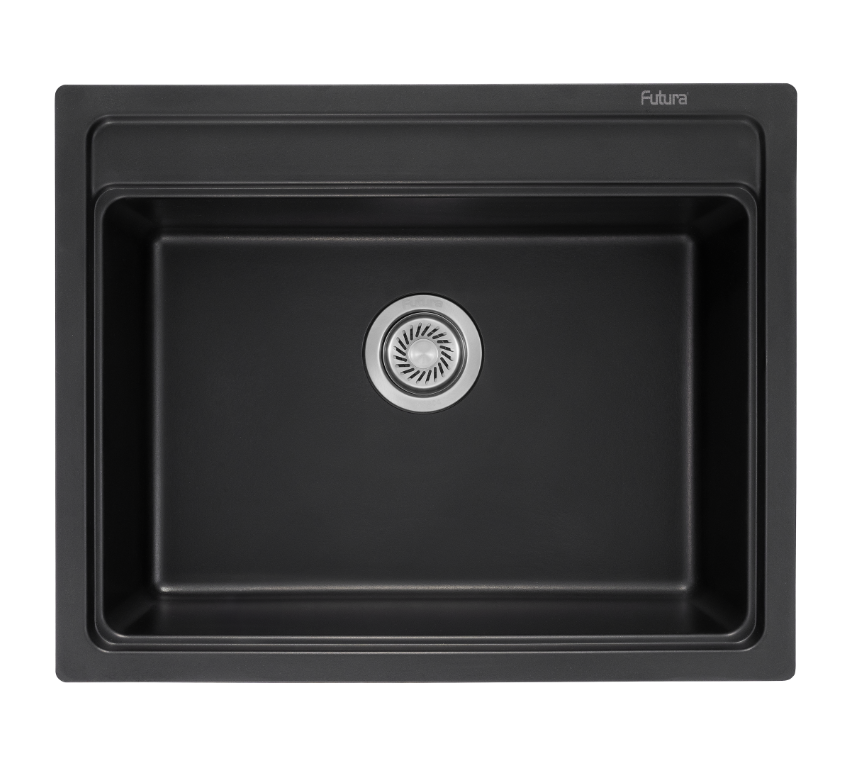
Quartz — Black matte finish hides water spots and scratches
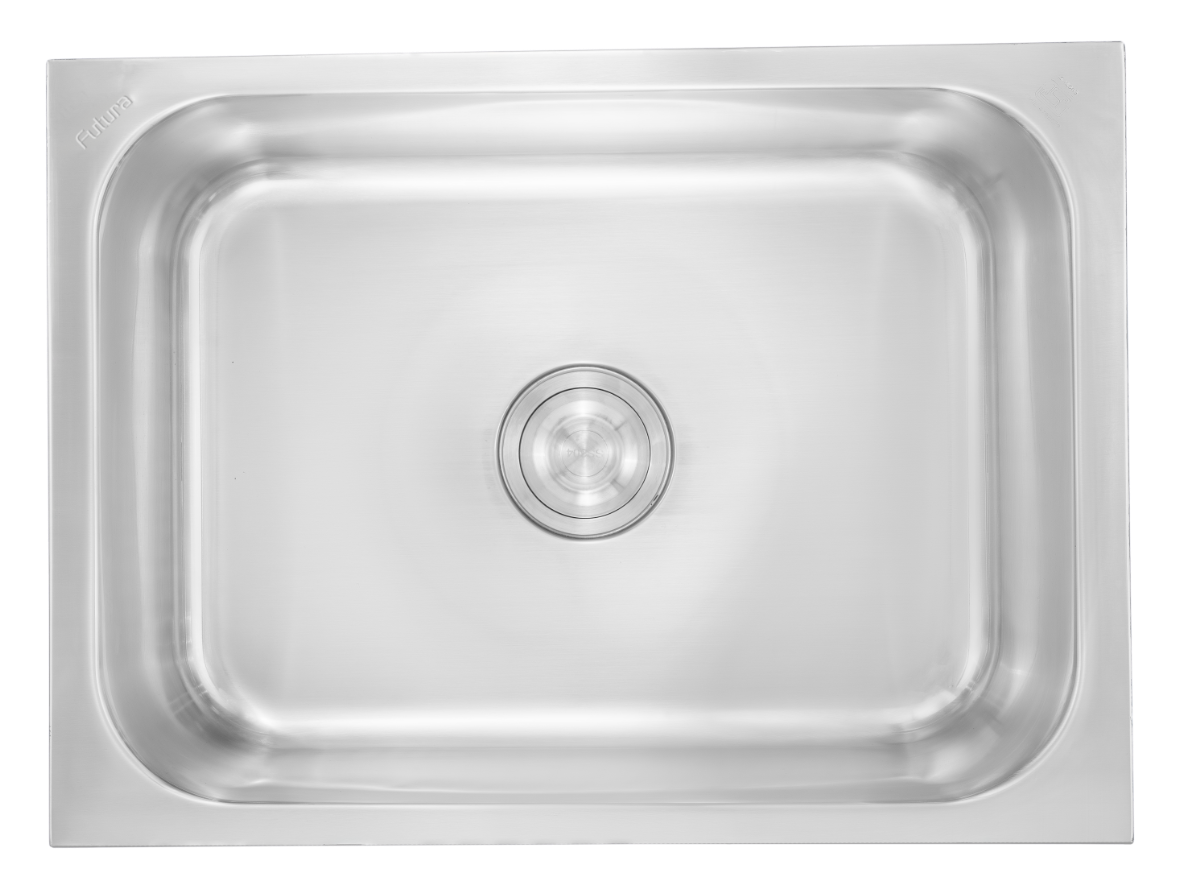
Dura Stainless — Premium satin finish with anti-fungal coating
5. Who Should Choose Which?
⚙️ Choose Stainless Steel If…
- You move hot vessels directly to the sink frequently
- Budget is a primary consideration
- Your kitchen has soft-to-moderate water (Mumbai, Kochi)
- You prefer lighter weight for easier installation
- You cook with cast-iron or very heavy cookware daily
- You want an industrial or classic kitchen aesthetic
- You need a large, deep single bowl for soaking big vessels
💎 Choose Quartz If…
- You live in a hard water city (Delhi, Chennai, Hyderabad)
- Sink noise bothers you or you have an open-plan kitchen
- You cook with intensely coloured spices frequently
- Aesthetics and colour-matching your countertop matter
- You want a low-maintenance, wipe-and-done surface
- You’re doing a premium renovation and want the upgrade
- Children or elderly family members use the kitchen
6. Still Unsure? Answer These 3 Questions
🧭 The 3-Question Decision Tool
7. The Verdict
If we had to give a single answer for the majority of Indian kitchens, it would be this: stainless steel for heavy-cooking, budget-conscious, or heat-intensive kitchens; quartz for hard-water cities, open-plan homes, and premium renovations where aesthetics matter as much as function.
Neither material fails in an Indian kitchen. Both will last 15+ years with basic care. The decision should come down to your specific cooking habits, your water quality, and your renovation budget — not brand loyalty or showroom pressure.
What we’d caution against: buying a cheap 20-gauge stainless steel sink to save ₹2,000. The gauge difference between a 16-gauge and a 20-gauge sink is felt every single day — in the sound, in the solidity, in the scratch resistance. If you’re going stainless, go 304 Grade, 16–18 gauge, with proper sound dampening. Everything else is a false economy.
And if you’re going quartz — ask your manufacturer about the quartz-to-resin ratio. 80% quartz content or above is the benchmark for a quality composite sink. Below that and you’re paying quartz prices for a predominantly resin product.
Futura’s Dura Series uses BIS-compliant 304 Grade stainless steel with an anti-fungal surface treatment and integrated sound-dampening pads — available in 20+ bowl configurations from compact 16″x14″ to large 47″x20″ double bowls. The Natural Quartz Series is manufactured with 80% natural granite quartz mineral content, 12mm bowl thickness, and available in four colour options (grey, black, ivory, sand) across 17 sizes. Both series ship PAN India with a manufacturer’s warranty. Contact us to speak with a product expert.